:: MIS Insights ::

by Fernando C Mendizabal Jr

Self-Control

Filed under: AM+DG — Pipboy at 8:19 am on Sunday, September 17, 2006

I attended Rory’s church yesterday. It wasn’t part of my weekend plan, but hey, a true MIS professional has to be flexible right?

I was actually hesitant about attending, but how can you say No to an invitation from the Big Man up there?

So, I went. The church was like a scene taken out from Whoopi Goldberg’s Sister Act sans the nuns. Western community church really isn’t my thing but it’s something that I’m not a rookie at. The church had a groovy band (lively), participative parishioners (they actually sing along with the choir) and insightful pastors (not boring, which is always good). All in all, the atmosphere set up the mood for the night’s topic: Self-control.

Self-control Redirects you to keep you in the right path, Restrains you to stick with the necessities of life and Rewards you for being good children of God. Among these three Rs, I was able to relate most with the second R - restrain.

Financially, I have spent more money than all my expenses in high school and college combined. Nutritionally, I think I consume enough calories every day to feed a family of three every day. Ambitiously, I am trying to do everything that I want to do - all at the expense of my health.

If I can exercise proper self-control, I can restrain myself to the basics of what I need.

From Proverbs 25:28:

Like a city that is broken down and without walls is a man whose spirit is without restraint.

I do believe I can have self-control.

There is no Tech Support

Filed under: Night Vision — Pipboy at 11:09 am on Saturday, September 16, 2006

I got back Trailblazer’s motherboard back. MSI tech support from suppliers in the Philippines upgraded my BIOS, but didn’t check or fix the problem - my busted CPU temperature probe. What should actually be an idle 30-35 degrees Celsius reading still shows up as an insane 55 degrees Celsius. PCX conveniently had no spare boards at the time and offered to pull it out again for another 3 weeks!

I declined, since I needed a desktop NOW for the projects that I’m working at.

Computer tech support in the Philippines suck. I wish there were an option to trim down the warranty period from 12 months to 1 month. It’s just useless insurance. For the past twelve years of my life, I have never had a wonderful tech support experience. Either they’d just rip you a RAM stick from your computer [VILLMAN] or they’d just be plain powerless to do something about the situation [PCX].

Where, oh where, is the fabled manager that can always make the situation right for the customer? The manager that can DECIDE AND ACT, rather than push blame back to the customer [VILLMAN - no, we’re no longer sure if you swapped the RAM stick outside the store so we can’t replace that] or the supplier [PCX - MSI should have fixed it. Maybe we can send it to them again for another check?].

Freedom is not just about making choices. It’s about having the right choices.

The next computer I get, I’ll be getting it from abroad. Where the inventory is fresh and prices aren’t cranked up.

Adapted from the Matrix:

Boy: Do not try to bend the tech support; that’s impossible. Instead, only try to realize the truth.
Neo: What truth?
Boy: There is no tech support.
Neo: There is no tech support?
Boy: Then you will see, it is not the tech supportthat bends, it is only yourself.

My Job is to Make Myself Obsolete

Filed under: Information System — Pipboy at 7:57 am on Thursday, September 14, 2006

Just recently, BusinessWeek reported about the skirmish for human resources between Lenovo and Dell in Asia where top executives from Dell are transferring to Lenovo. To date, 6 key figures have moved out of Dell (ranks 3rd place in Asia according to International Data) towards industry-leader Lenovo.

While such brain drain would have caused big problems to most companies, not under Steve Felice’s watch.

It’s obviously something that we didn’t expect…we are dealing with it. None of these people is irreplaceable.

Brain drain can be fixed with a properly implemented Knowledge Management Program. At the heart of such undertaking, is the objective to retain intangible assets like knowledge and wisdowm within the organization. This usually involves:

Documentation
Procedures and best practices in a company should always be documented. In this way, the basic responsibilities and know-how required in a position can easily be retrieved by the replacements. Documentation can take in lots of forms: manuals, blogs, webcasts, podcasts, audio, video, etc. Day by day, more and more companies are seeing the possible business applications of today’s technologies.

Super-Vision
Rookies can jumpstart their knowledge through a mentoring program. Paired with a senior, rookies can get a taste of visionary guidance from someone who’s been there and done that - Super-Vision. While there might be an abundance of books detailing the concepts and theories of the practice, the shortcuts and lessons from supervisors that don’t make it to the books are priceless.

Grooming
There is a lot of truth in the saying, “Nothing beats experience.” For organizations who want to develop the depth and breadth of their bench, nothing beats being thrown into the actual job. With regards to information-heavy jobs, this is where the thought process gets developed and used well. This goes to show how memorizing stuff in college isn’t really that useful. Or maybe that’s just me talking… Moving on…

Intangible assets like worker experience and know how should be given as much thought as tangible assets like land and property. With a properly trained replacement, filling up a emptied spots in a company can be less expensive (immediate trainings, out-of-budget briefings, etc.) and a lot easier (less disruption of work for people dependent on the vacant job).

Personally, I believe that my job is to make myself obsolete. Whenever I work on systems, I try to make it a point to provide the proper system documentation and training for the users. I want the system to be easy to use and automated as much as possible so that they won’t need me to do their stuff for them. For instance, if they want to update the news section of their site, they don’t have to go to me to upload the document. They can do it themselves by using the form and manual I provide. I want to make it very easy for them to replace me. In that way, clients keep coming back for more.

How about you? Are you obsolete?
Customer-Centric Costing

Filed under: Leadership — Pipboy at 6:23 pm on Wednesday, September 13, 2006

How do people cost their projects or services?

Experience
Experience and expertise in a given field can jack up or drive down prices. If you’re alone in an industry where there are a few experts - like a COBOL mainframe programmer, you can expect high rates for your skills to maintain legacy applications. Now contrast this to the army of Java programmers that colleges churn out. With the latter, you’d have to be very good or very experienced at the field to justify a premium.

Supply and Demand
However, the economic law of Supply and Demand can easily overrule such principle. For instance, you might be the only QBasic programmer in town where the demand for such services is nil. In this case, don’t expect the local market to pay you well. There is simply no demand for the QBasic service that you are supplying.

Values
Would you pay Steve, your shoe-shine guy, $1000 per year for polishing your shoe? Would you pay a gold miner $100 per trip to bring up rock from the ground? How about CEOs? How many CEOs can live well with a four-digit annual salary? Simply put, some jobs like Steve are valued differently in the economic food web. Some jobs can easily command a higher salary than the others - regardless of one’s investment in time, skills and effort - just because society thinks and values that it should.

Customer-Centric Costing
This afternoon, I got invited for a second interview for a project that my colleagues and I were vying for. During the first round, there were several bidders. Though our skills netted thrice the quality of our competition, our bid was twice as expensive as the competition - which didn’t really spell good for us. Unfortunately, price was one of the constraints for the project and we were advised of such project limitations.

So, my partners and I took away all of Rambo’s extra guns and ammo, leaving only the essentials: an Armalite, a jungle knife and a clip for a reload. This resulted in a costing that was as affordable as the competition while still meeting the minimum requirements. The client seems to be pleased and we’re off for a second round of negotiations.

Sometimes, landing projects is all about wanting to do what you do. If excess money will be the only obstacle between me and a project, by all means, let’s take it away. After all, I love what I do. That’s what I meant with this post I made a few months ago. From the movie Jerry Maguire:

Here’s why you don’t have your ten million dollars yet.

You are a paycheck player.
You play with your head. Not your heart.
In your personal life? … Heart.
But when you get on the field — you’re a businessman.

Do you love what you do? Because until you love what you do, customers won’t love what you do.

The Authentication of the Ring

Filed under: Security — Pipboy at 10:56 pm on Tuesday, September 12, 2006

Once upon a time, there were ten employees in a big, bhg, bpg company. These ten employees, hailing from the same department, decided to go out for a noontime feast one day. Among the ten brave souls that dared to eat outside the department premises, five of them brought their magic identification cards. The rest didn’t.


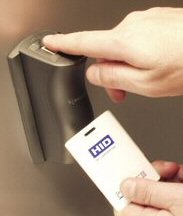
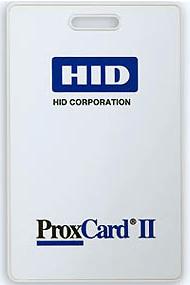
HID prox cards

Now these magic identification cards were bestowed upon them by the all-powerful Human Resources department to empower them during their quests - most of which had a minimum 2.5 year fellowship bond. Legend has it that if the magic cards were placed near the correct scanners, doors that led to untold treasures would open for them.

Love ko to!

10 value meals and 1 hour later, the ten employees went back to the company to resume their quests. The first five with identification cards easily got in. With a 180-degree, crescent-shaped swiping motion of their magic identification cards over the department door’s scanner, the door unlocked with a loud “bzzzt!”

HID reader

Then there was the other half that didn’t bring their magic card. They thought that, “Hey, fellow adventurers, you can let us in when you get in right?”

Well, the five cardless dolts were wrong. Their fellow prudent adventurers didn’t let them hitch a ride back inside to the department. They knew that the magic identification cards were there for a reason - to prevent, or at least minimize, unauthorized entry. One cannot even begin to imagine the horrors that would be unleashed if a cracker got inside to mess with the systems or if an intelligence spy got access to the company’s treasured information chest. Such careless behavior should not be tolerated. After all, who better can implement the company’s security program, other than the employees themselves?

The five boy/girl scouts wanted to teach the five rascals a lesson. However, the guard waiting at the lobby proved to be the weak link in the company’s security plan. With a persuasion spell of Pleasus Openus the Doorus Maximus, the guard promptly used his magic card to let the employees in to the department.

End of Story.

Truly, companies could do more with their security measures. This is an example of a security breach that used social engineering (guard) to thwart two of the pillars of IT security - authentication and authorization. In my honest opinion, either companies start implementing what they have on paper or scrap the whole program all together. With roughly US$3 per magic card and a hefty US$1,000 per scanner, the money could have been put to better use for the sake of the stockholders.

IT Security Principles

Filed under: Information System — Pipboy at 7:49 am on Monday, September 11, 2006

Information Technology roughly has six principles that it follows. For any organization that wants to have a secure system, most Consultants, System Administrators and Software Engineers look at the following checklist:

1. Authentication is the process of identifiying someone or something. It is the process which makes sure that only the right people get in to a system.

2. Authorization determines what users can or can not do with the system. Think of it as your list of privileges.

To illustrate the difference between Authentication and Authorization, think of Alice who works at the Accounting department of Stoned Company. Alice can be authenticated or identified with an ID that she has, allowing her to enter the company building. However, Alice might be authorized only with access to the floor where the Accounting department is located.

3. Non-Repudiation is one way to make sure that messages are sent and received by the involved parties. The sender cannot later deny that she sent a message and a receiver cannot deny receiving message.

For instance, if Alice sends an e-mail to Bob, Alice cannot say that “she did not send an email to Bob.” Bob, on the other hand, cannot say, “I did not receive anything from Alice.”

This contractual setup is particularly useful in tracing transactions between parties and assigning responsibility to the people involved.

4. Integrity is making sure that data never gets compromised or changed while in transit between Alice and Bob’s mailboxes. Whether data is unintentionally corrupted along the way due to lost packets over the internet or a cracker intentionally alters the message, Integrity mechanisms must be in place to make sure that the message arrives the way it was sent.

5. Confidentiality, on the other hand, is making sure that only the intended recepients receive the message. If Bob sends a message intended for Alice, Eve must not be able to read the message. Eve might intercept it, but must not be understandable for her. This is usually accomplished by using Cryptographic technologies.

6. Availability. The availablility of services anytime is one of IT’s main selling points. That’s why hardware and software solution providers are working hand-in-hand to craft solutions that bring consumers the most nines (ex. 99.999999% uptime).

This is just an introduction of the big topic that IT Security is. Stay tuned as we go through each of the principles along the way.

Unrecognizable Plate Numbers: A Hazard in the Making

Filed under: Philippines 2000 — Pipboy at 10:59 am on Saturday, September 9, 2006

When I was driving on my way to Ateneo this morning, I got behind a car whose plate number plaque was covered with dark plastic. The plastic was dark enough to render the plate number unreadable even under broad daylight. This isn’t the first time I’ve encountered illegible (non-readable) car plaques on the road. I’ve noticed that more and more people are following suit and I think that this isn’t good for the Philippines.

Having an unrecognizable plate number is a license to kill in the Philippines. The possibility of speeding away without getting identified after an accident is quite distressing for me. My slippery-slope prediction? An increase in non-readable plate numbers will also trigger an increase in “hit and run” situations in the road. This will make the Philippines more undesirable, attracting less investors and venture capitalists.

If MMDA and LTO don’t get their act together to put a stop on this, our roads will be infested with reckless drivers. Fixing this kind of problem later will be much more expensive. It will be more expensive for the MMDA because it will have to acquire implements to catch the violators (i.e. motorcycles to chase them). Ultimately, it will be more expensive for the people once MMDA figures out the costing of such violation (cars getting towed, tickets, etc). Though I have a feeling this might not be such a bad business proposition for MMDA+LTO… Get more dark plaques out there, then we can start farming the roads … *Ahem!* … going back…

Audience Rebuttal : Whoever said that having dark-colored plates equates to reckless drivers? Is there a study for this?

I’ve seen it on the road. Filipino drivers will do anything crazy on the road if there is no police officer around. Tricycles counter-flowing / going the opposite direction of the road. Jeepney drivers taking a U-turn in non-designated U-turn slots. Buses stalling along Edsa to wait for passengers, creating bottlenecks that usually stretch from Megamall to Kamuning. And let’s not even talk about the privately-owned car drivers whose driving ethics doesn’t include giving way to others.

Do you really think that ALL people who get dark-colored plastic covers for their plate numbers will only use it for fashionable purposes? Just like how students don’t want to wear identification cards in school these days?

Diversity + Leadership = Flying Cars

Filed under: Corporate Dots — Pipboy at 8:21 am on Friday, September 8, 2006

When you’re building a team, it is always a good idea to aim for diversity. In this way, a team can avoid groupthink (when everybody thinks the same, little value is added in being part of a team). It also allows a team to have more perspectives and skill sets at their disposal.

In my experience, I’ve found it useful to surround myself with different people once in a while. Not only does it make things a lot interesting, but such environment has also taught me more than I could have ever learned alone or with the same group over and over.

Some might argue that this setup doesn’t always work. Having all the right skills (competent teammates) and enough resources (assets and budgets) can sometime prove insufficient. This is where a team leader comes in handy. A team leader can share in the work but he must of prioritize two things: lead (set a goal or direction for the team) and manage (maintain movement towards the set goal).

This seems to be the direction for automotive company Ford: Diversity and Leadership. Bill Ford recently stepped down as CEO and got replaced by Alan Mulally, the man responsible for turning Boeing around and making it a profitable company again.

That’s why many people have been asking, what’s an airline dude like Mulally going to do with an automobile business? Can Mulally bring the diversity needed for Ford to make a comeback? Will this usher in a new breed of flying cars like what we saw in the Jetsons?

I’m keeping my fingers crossed. :D

Google offers News Searching

Filed under: Information System — Pipboy at 8:03 am on Thursday, September 7, 2006

Google is now offering its search services for news archives. From the Google’s mouth:

News archive search provides an easy way to search and explore historical archives. Users can search for events, people, ideas and see how they have been described over time… Search results include both content that is accessible to all users and content that requires a fee.

Though according to BusinessWeek, Google won’t get any payments for offering the service. Whatever prices the articles fetch, the article providers get all of it.

There’s No Such Thing as a Free Lunch
I don’t have anything against Google - not a day goes by without me using Google. It has made information (and sadly, trash) from the web more accessible. So, thanks, Google! However, hearing the “free service” on the part of Google makes me wonder, is it really free? From my Economics 101 class a few years back, Mr. Cielito Habito told us that there’s no such thing as a free lunch. There has to be something in it for Google…

  • Ads. Most of online news websites survive or thrive by selling ad space over the internet. After taking Google’s News Archive Search for a ride, I found out that around 3 out of 5 results had Google Ads in the site. If the site didn’t have any Google Ads, there’s a high probability of the in-site search being powered by Google. Leave it to Google to increase the visibility of their products.
  • Quasi-Portal. Unlike Yahoo! and MSN whose portals push content to the customer, Google is doing everything to make their services do the opposite - Google wants the customer to pull content. Following the “Customers want everything Customized” principle, this makes the Google user experience more attractive than the others. Hell, I even stumbled upon Google Alerts this morning while I was checking this service out!
  • Libraries. If Google proves successful in this service, the mastery they will get out of this free service will allow them to charge for their services on government and university libraries in the future. Imagine the prospects of digitization and archiving of all the old news stored in microfilm. Think of how much aid this can be for students and researchers.

I don’t mean to sound sarcastic nor do I intend to sound like a Google-fanboi. However, the ability to harness data into meaningful information is something that has made Management Information Systems a real reality today. My mornings are dedicated to reading magazines, informative blogs and online gazettes. If Google News works the way it was intended to be, then my daily “Connect-the-dots” routine will be a lot easier, if not faster to accomplish.

e-voting

Filed under: Philippines 2000 — Pipboy at 10:43 am on Wednesday, September 6, 2006

Slashdot pointed me to an article that demonstrated how to crack a Diebold self-service voting machine.

A couple of untrained 54-year old women from Black Box Voting bought $12 worth of tools and in four minutes penetrated the memory card seals, removed, replaced the memory card, and sealed it all up again without leaving a trace.

Is it really that easy to crack voting machines? Is that the main reason why the implementation of an electronic election system has been put off so long despite having all the necessary materials ready?

News Flash:

Last 2003, Mega Pacific eSolutions Inc. was awarded with a contract worth PhP1.3 billion (US$25.27 million) by the Comelec. The agreement was for around 2000 Automated Counting Machines to be used in the May 2004 elections. Later on, Comelec paid and Mega Pacific delivered the machines. There was no e-voting during the 2004 elections. Why? At January of 2004, the Supreme Court nullified the contract between Comelec and Mega Pacific because of some legal technicalities.

So for the past two years, the Philippine government has been asking Mega Pacific to return the money. Mega Pacific has yet to comply with such request.

Supreme Court
Why the H didn’t the Supreme Court step in a lot earlier before the PhP 1.3 billion transaction was made? I hope this wasn’t part of an orchestrated plan for a system that wasn’t bound to work at all from the beginning. Think about it, from a technical standpoint, e-voting is easy to implement. However, from a cultural perspective, e-voting will be a pain in the arse to implement in the Philippines.

  • Education. The Filipinos aren’t educated yet on how the system works.
  • Apathy. The deal was for 40 million Filipino votes. That’s almost half of our local population. How many of them actually go out and vote?
  • Accuracy. The machines were proven to be accurate. I think some politicians didn’t like the idea of a voting system that was too accurate. If 40 million votes out of 80 are hard enough, imagine 40 million unique votes…

Sour Loser
Or could this be a case of a sour loser? Did the losing bidders get something out of the deal too by being quiet for a while? Or did they specifically wait for the Comelec and Mega Pacific to get entrenched too deeply first before bringing this up?

Cheated-Cheater
As with most government biddings, there are always two sides of the camp. Those who won and those who got cheated. Did the other bidders really got cheated when it lost to a 2-month old corporation? Was Mega Pacific eSolutions created to address real problems or to cheat us out with virtual solutions? Who was cheated? The bidders? Comelec? Mega Pacific? The politicians? The Supreme Court? None of the above. It was the Filipino People. The people who are paying e-vat so that there’ll be a bigger budget to craft real solutions for the people.

However, enough of this negative investigative journalism. We already have too much of that out there on the net. I’m not looking for cheaters or mistakes. I’m looking for opportunities and strengths to leverage.

With the 2007 local elections coming up, it seems that there’s no hope for an electronic voting system on the horizon. Until then, it seems like quick counts will be done manually. Since the machines are already there, I hope a little common sense wafts into the room and make them realize that the best thing that they could do is go out and use it. Maybe not on 2007, but hopefully soon. The longer we keep them stocked up, the more money that the Philippines loses through storage costs, inflation, opportunity cost and depreciation. Or we could do as Botswana does

In Botswana, until 1999, voting was done by colored marbles. Polling places had jars of marbles for the candidates. Each candidate’s jar had marbles of a different color. Voters filed through, picked a marble from their candidate’s jar, and dropped it into a box. At the end of the day, the marbles in the box were sorted and counted.

« Previous PageNext Page »
 

Bad Behavior has blocked 134 access attempts in the last 7 days.